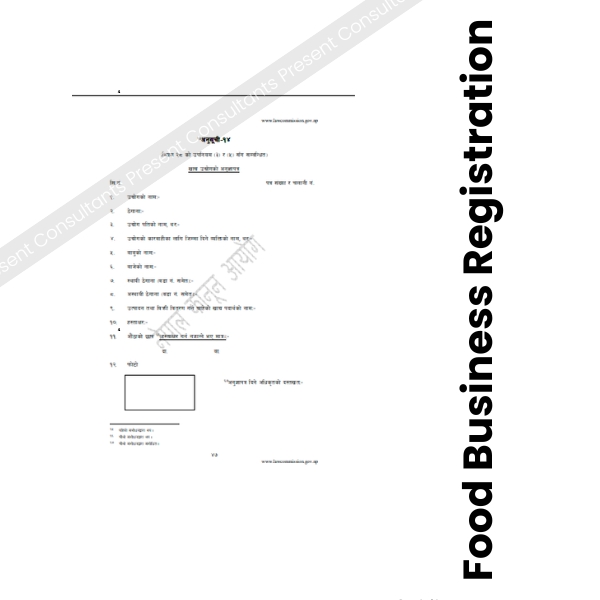
Obtaining a food license is a mandatory health and safety requirement for any entity involved in the production, processing, packaging, or sale of food and feed. Under the Food Hygiene and Quality Act, 2081, all businesses—from small-scale bakeries to large manufacturing plants—must secure a DFTQC (Department of Food Technology and Quality Control) License via the digital NeFFILS portal before commencing operations. The operation of the food industry also requires preapproval from the department before the registration of the industry.
₨ 150,000.00
In Nepal, the Department of Food Technology and Quality Control (DFTQC) serves as the primary regulator for food safety. The transition to the Food Hygiene and Quality Act, 2081, has modernized the licensing landscape, aligning local standards with international Codex Alimentarius guidelines. This ensures that food products in the market are safe for human consumption, properly labeled, and free from prohibited additives or adulterants.
According to Section 9 of the Food Hygiene and Quality Act, 2081, before operating any food business in Nepal, a license from the DFTQC needs to be obtained. An application to the department requires submission of the documents like evidence of food business registration, facility standards, hygiene protocols and management details of the business. The DFTQC now utilizes the Nepal Food & Feed Industry Licensing System (NeFFILS), making digital submission and lab report integration mandatory for all new registrations and renewals.
Under Section 40 of the Act, operation of a food business without a license is a criminal offense prosecuted by the state, leading to fines. Furthermore, the Act mandates strict labelling requirements: all packaged food must display the batch number, manufacturing date, and nutritional information in a clear, non-misleading format.