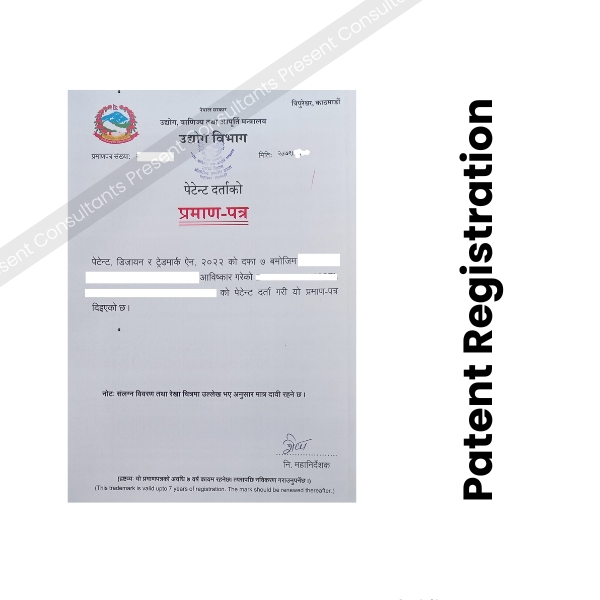
Pursuant to Section 4 of the Patent, Design and Trademark Act, 2022, any person desirous of registering a patent must submit a detailed application containing the manufacturing process, the theory or formula involved, and maps or drawings. To be patentable, an invention must satisfy three core legal criteria: Novelty (it must not have been publicly disclosed anywhere in the world), Inventive Step (it must not be obvious to a person skilled in the art), and Industrial Applicability (it must be capable of being manufactured or used in any kind of industry).
The protection granted is limited in time but powerful in scope. Under Section 8, a patent is initially valid for 7 years from the date of registration. It can be renewed twice for an additional 7-year term, providing a maximum of 21 years of protection. However, failing to renew within 35 days of expiry (or the 6-month grace period with a fine) results in the invention falling into the “Public Domain.” Under Section 15, infringement of a registered patent can lead to a fine of up to NPR 500,000, confiscation of the infringing goods, and a court-ordered injunction to stop unauthorized production immediately.