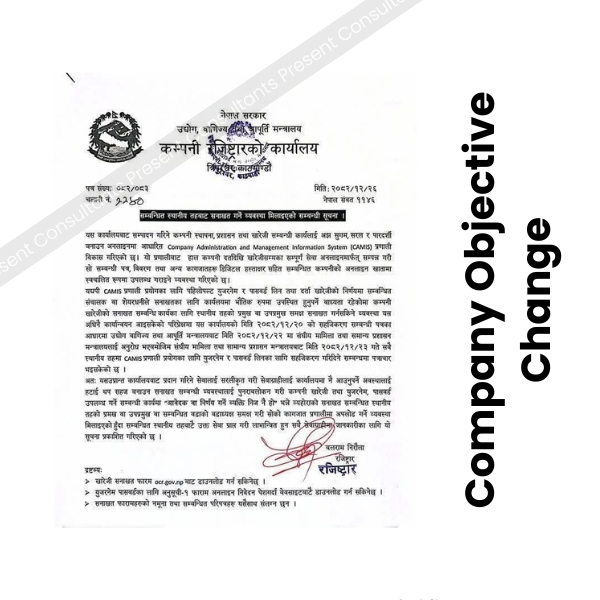
Pursuant to Section 19 and Section 21 of the Companies Act, 2063, a company must pass a Special Resolution (75% majority) in a General Meeting to amend its objectives. Under the Company Directive, 2072, if the new objective requires a specific license (such as for health, education, or hydropower), a Prior Approval (Sanchalan Swikriti) or “No Objection Certificate” from the concerned regulatory body must be attached. The amended MOA/AOA must then be submitted to the OCR within 30 days of the resolution to maintain OCR Compliance Nepal.
Engaging in business activities not listed in your certified MOA is considered Ultra Vires (beyond legal power). Under Section 160, directors can be held personally and civilly liable for contracts signed under unauthorized objectives. Furthermore, the Inland Revenue Department (IRD) may refuse to add new “Business Activity Codes” to your PAN/VAT certificate if the OCR record is not updated, leading to tax non-compliance and potential freezing of bank accounts