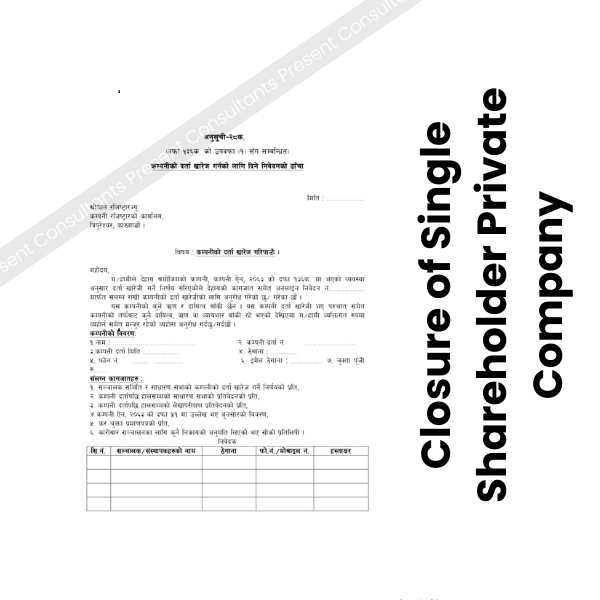
According to Chapter 10 (Voluntary Liquidation) and the newer Section 136A (Special Deregistration) of the Act, the path to closure depends on the company’s status. For active companies with assets and liabilities, the shareholder must pass a special resolution to appoint a liquidator and file a Declaration of Solvency. Conversely, for dormant companies that have remained inactive without significant assets or liabilities, Section 136A provides a simplified administrative exit, allowing for a faster deregistration process without the full rigors of formal liquidation.
Failure to formalize this exit carries severe risks under Section 81 and Section 136 of the Companies Act, 2063. An “Inactive” company continues to accrue cumulative fines at the Office of the Company Registrar (OCR), which can range from a few thousand to several lakhs of rupees over time. Furthermore, the shareholder may be blacklisted from registering new companies, and unresolved tax liabilities at the Inland Revenue Department (IRD) can persist, potentially affecting the individual’s personal financial standing and future business ventures.