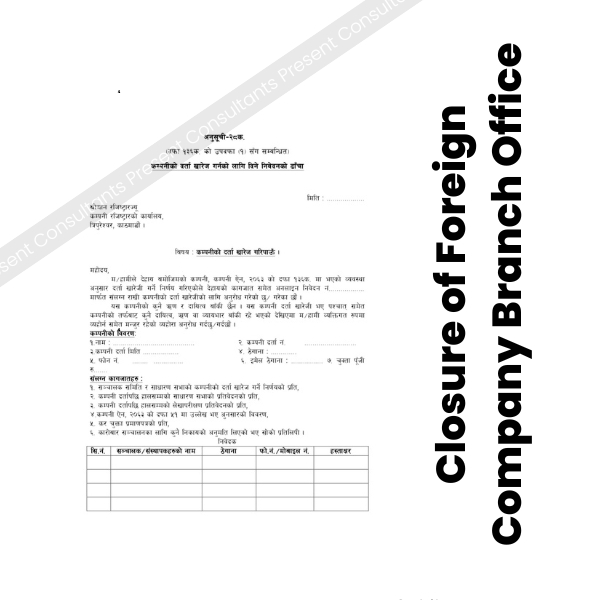
Pursuant to Section 158 of the Companies Act, 2063, a foreign company must notify the OCR at least 30 days before it intends to cease its business operations in Nepal. The primary legal hurdle is the Settlement of Local Liabilities. Because the parent company is directly liable for the branch’s actions. Company must prove that all local creditors, vendors, and government dues have been cleared.
Failure to follow these steps leads to severe legal and financial risks for the parent company. Under Section 160, the OCR can impose heavy fines for failing to notify the office of closure. More importantly, leaving a branch “Inactive” without formal closure prevents the parent company from obtaining a Tax Clearance Certificate from the Inland Revenue Department (IRD). This block will stop the repatriation of any remaining funds or surplus assets out of Nepal, as the Nepal Rastra Bank (NRB) requires a final tax clearance and OCR dissolution certificate to approve the outward transfer of foreign currency.