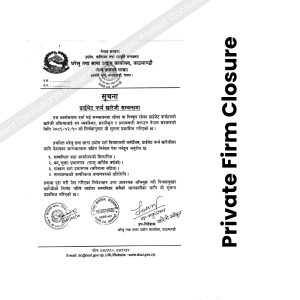
In Nepal, Non-Governmental Organizations (NGOs) and International NGOs (INGOs) that receive foreign funding or partner with international agencies must be affiliated with the Social Welfare Council (SWC). Affiliation Cancellation (or deregistration from SWC) is the formal administrative process of terminating this link. This is a critical step when an organization is closing down, merging, or no longer intends to receive foreign aid, ensuring that all project liabilities are settled and the entity is cleared from the SWC’s active database.
₨ 30,000.00
The licensing and monitoring of social organizations are governed by the Social Welfare Act, 2049. While an NGO is originally registered at the District Administration Office (DAO), the SWC affiliation is the specific legal mechanism that grants the “right to operate” using external resources and international partnerships. Deregistration is the formal “handing back” of this authority. It serves as a legal declaration that the organization has fulfilled its social obligations, completed its project evaluations, and is no longer subject to the monitoring, reporting, and “Social Service Fee” requirements of the Council.
In accordance with Section 13 of the Social Welfare Act, 2049, which empowers the Council to monitor, evaluate, and supervise the activities of affiliated organizations, an entity seeking to cancel its affiliation must demonstrate full regulatory closure. A legally sound exit requires the submission of a formal board resolution authorizing the cancellation, supported by a final Project Evaluation Report and a comprehensive Audit Report that confirm all project funds were utilized as per the approved Project Agreement (PA) under Section 12 of the Act. Furthermore, the organization must provide a “No Objection” or recommendation letter from the relevant local government implementing units, settle all outstanding Social Service Fees owed to the Council, and return the Original Affiliation Certificate.
Failure to formally cancel affiliation can result in the organization being flagged as “non-compliant,” leading to the potential blacklisting of board members and preventing them from registering new social ventures in the future.