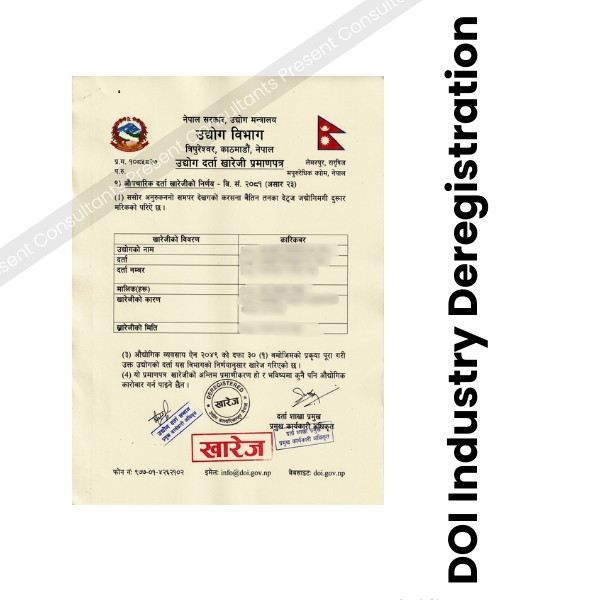
According Section 15 of the Industrial Enterprises Act, 2076 any industry intending to cease operations must submit a formal application to the Department of Industry (DOI). Under Section 15(2), the DOI will only grant a cancellation order after verifying that the entity has settled all outstanding government dues, liquidated employee liabilities, and fulfilled any conditions attached to its license. According to rule 12 of the Industrial Regulation, 2078, the industry must submit liquidation reports, proof of fulfilment of all liabilities, proof of tax payment, original certificate of registration of industry, audit reports and self-declaration of no-liability to the courts/authorities.
Abandoning an industry without formal deregistration leads to severe legal and financial liabilities under Sections 42 and 43 of the Act. As long as the license remains active, the industry continues to accrue administrative fines and remains legally responsible for legal obligations. This may result in the forfeiture of bank guarantees and potential “blacklisting” of promoters by the DOI, which can prevent the registration of future business ventures. Additionally, without following the closure protocols defined in Section 56 of the Labor Act, 2074, the company remains vulnerable to perpetual litigation and claims for employee compensation.