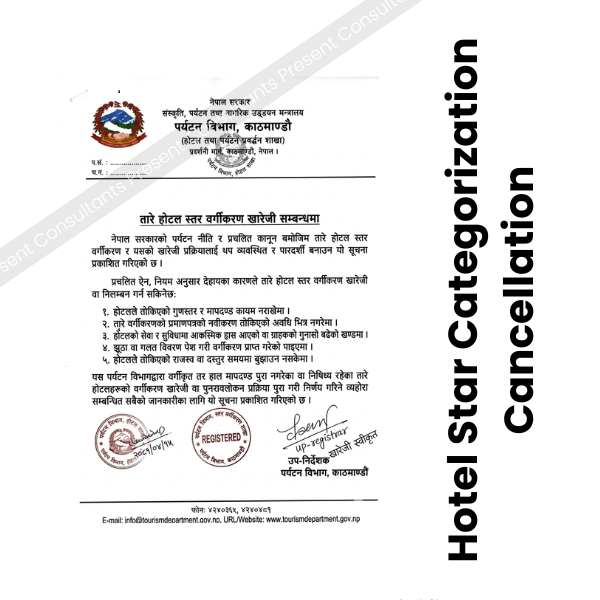
To achieve a legally sound closure under Section 10 of the Tourism Act, 2035, and the associated Hotel Regulations, an operator must satisfy specific de-listing criteria to avoid administrative penalties. The primary requirement is the submission of a formal Board Resolution and a “Closure Plan” that addresses the settlement of all outstanding staff liabilities under the Labor Act, 2074. Additionally, the operator must provide a tax clearance certificate from the Inland Revenue Department (IRD) and physically return the Original Star Categorization Certificate to the Department of Tourism to officially terminate the entity’s classified status.
Neglecting the formal cancellation process keeps the hotel on the “Active Star List,” making it liable for annual monitoring fees and potential fines for failing to maintain the mandatory service standards associated with its rank. Furthermore, if the hotel continues to use “Star” branding after physical closure or unauthorized change in use, the directors may face blacklisting by the Ministry of Tourism, barring them from obtaining future tourism-related licenses or incentives.