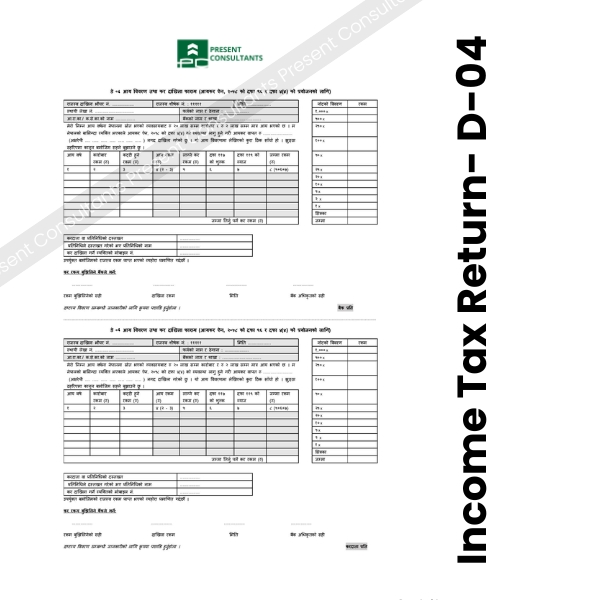
Pursuant to Section 96 of the Income Tax Act, 2058, read together with the standard protocols of Schedule-1, specific individual taxpayers are legally mandated to submit an annual self-assessment return. To determine the necessity of filing the Income Tax Return- D-04, the Inland Revenue Department’s directives outline clear behavioral and financial triggers: individuals whose annual remuneration income crosses Rs. 40 Lakhs (NPR 4,000,000), or natural persons who derive concurrent assessable income from multiple employers, or those who realize taxable gains from the disposal of non-business chargeable assets (such as land, houses, or stocks) under Chapter 8. According to the law, this personal declaration must be submitted by Ashoj end (mid-October) of each subsequent fiscal year. Furthermore, the Income Tax Directives establish that while single-source employees below the threshold are exempted under Section 97, any individual claiming foreign tax credits under Section 71 or medical credits under Section 51 must file Form D-04 to validate their deductions. Our premier business consultancy Kathmandu carefully balances your mixed income streams to ensure complete accuracy before portal transmission.
Failing to submit your consolidated personal return or delaying the filing schedule triggers severe financial penalties under the Act. Pursuant to Section 117(1)(Kha) of the Income Tax Act, 2058, failure to submit an income tax return within the designated timeline results in a flat administrative fine of Rs. 5,000 per filing period. Additionally, under Section 119, any unpaid tax balance resulting from unlisted investment gains or multi-source salary gaps incurs an interest rate of 15% per annum, compounded from the initial due date until the liability is completely liquidated. Operating without filing also blocks your profile from receiving an official Tax Clearance Certificate (TCC), creating major legal bottlenecks for personal bank financing, visa processing, and high-value property acquisitions.