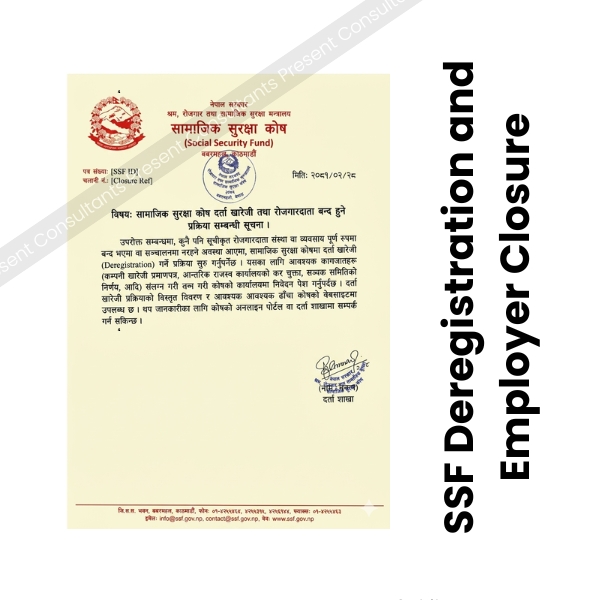
Pursuant to Section 24 of the Contribution-based Social Security Act, 2074, an employer is legally mandated to notify the Fund within one month of the termination of an employment relationship or the closure of the business. This notification is the trigger for the Fund to stop assessing monthly dues. A critical legal mandate involves the Settlement of Arrears. Under Section 9, if a company closes without clearing outstanding contributions, the SSF is authorized to recover the amount with a 10% interest penalty. The law treats these contributions as “priority debt,” meaning they must be settled before shareholders can distribute any remaining assets from the company’s liquidation.
Failure to formalize SSF deregistration may lead to severe enforcement actions under the Act. If a business stops functioning, fails to notify the Fund, and fails to pay the required amount, the SSF can request the government to freeze the bank accounts and movable/immovable properties of the directors. Furthermore, the Office of the Company Registrar (OCR) and the Inland Revenue Department (IRD) often require an “SSF Clearance” or proof of employee termination before finalizing the company’s legal dissolution. Without formal deregistration, the proprietor remains personally liable for the workers’ social security benefits, including medical and accident insurance claims that may arise during the “limbo” period after the business has stopped but before the license is canceled.