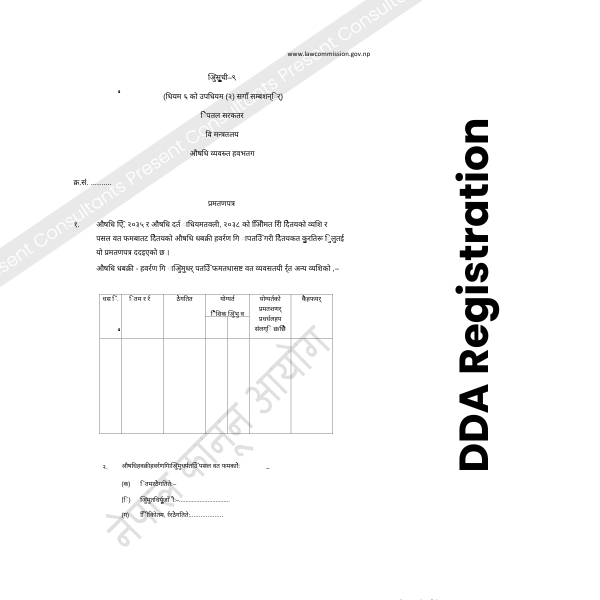
According to Sections 8 and 10 of the Drugs Act, 2035, no person is allowed to manufacture, import, or sell drugs without obtaining a formal license and registering the specific product with the DDA. For manufacturers, compliance with the National GMP Code is a prerequisite. For importers, a Certificate of Pharmaceutical Product (CPP) from the country of origin and an Import License are mandatory. All applications are now processed through the DAMS (Drug Administration Management System) portal, requiring digital submission of the Product Information Dossier (PID), stability data, and lab analysis reports.
According to Sections 34 and 35 of the Act, manufacturing or selling drugs without a license can lead to imprisonment for up to three years and fines up to Rs. 25,000. If a business is found selling adulterated or sub-standard drugs that endanger life, the penalties can escalate to life imprisonment or a fine of up to NPR 100,000 (or the amount in controversy, whichever is higher). Furthermore, the DDA has the authority to immediately seize illegal stock and cancel the business license of any entity found in non-compliance, making registration a fundamental safeguard for both the proprietor and the public.